
DC Comics
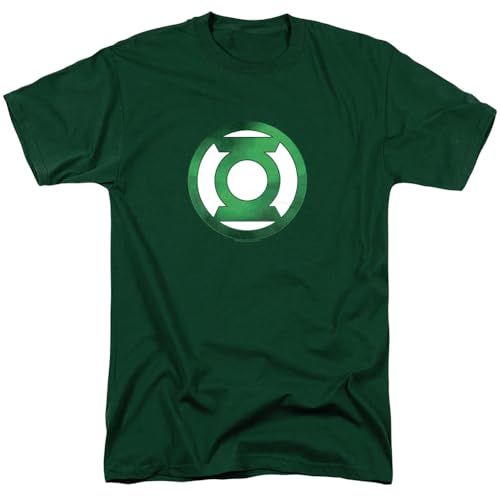
DC Comics Green Lantern Classic Logo T-Shirt Small
$16.99on amazon.com · Sep 29, 2026
Check sizes and price on Amazon
DC Comics
Green Lantern is DC's science-fiction franchise wearing a superhero costume. The premise — an intergalactic police force of thousands, each member issued a ring that turns willpower into solid light — gives the character a scope most superheroes lack, and it made him the natural vehicle for the company's cosmic storytelling.
Green Lantern is DC's science-fiction franchise wearing a superhero costume. The premise — an intergalactic police force of thousands, each member issued a ring that turns willpower into solid light — gives the character a scope most superheroes lack, and it made him the natural vehicle for the company's cosmic storytelling. The concept has been rebuilt more than once. Alan Scott's 1940 version was magical rather than technological; Hal Jordan's 1959 relaunch introduced the Corps and the Guardians. The title also carries one of the most-cited moments in American comics: the 1970 Green Lantern/Green Arrow run by Denny O'Neil and Neal Adams, which put social realism into mainstream superhero books and is generally credited with dragging the medium toward adult subject matter. John Stewart, introduced in 1971, became one of the first Black superheroes at DC and is the version many readers first met through animation.
DC's principal cosmic property and the home of the run most often credited with pushing superhero comics toward serious social subject matter. The Corps concept — thousands of parallel heroes with the same power set — is one of the genre's most reused ideas.
Signature motif: The circular lantern emblem — a bar across a ring — in green on black
The mark is abstract, symmetrical and works in one colour, which makes it unusually flexible on apparel. Green on black is the standard pairing and the glow effect is often printed rather than implied.
The lantern emblem is abstract enough to work as a large centre print, a small chest mark or an all-over glow treatment. Green on black dominates; the ring itself is a common secondary graphic in adult sizing.




Buying from outside the United States? Prices shown are amazon.com in US dollars. Links redirect international readers to their local Amazon, where pricing, sizing and availability are shown in local terms.
Price and availability are taken from Amazon at the time shown and can change. The price on Amazon at the time of purchase applies.
These links run a live Amazon search for Green Lantern shirts in each US size band. Amazon shows what is currently listed; availability in a particular size is confirmed on the product page, not here.
| Band | Ages | US sizes | Search |
|---|---|---|---|
| Toddler | 2–4 years | 2T, 3T, 4T | Search toddler sizes |
| Kids | 4–7 years | XS (4/5), S (6/7) | Search kids sizes |
| Youth | 8–14 years | M (8), L (10/12), XL (14/16) | Search youth sizes |
| Adult | 15+ | S–3XL | Search adult sizes |
US sizing shown. Cut and measurement vary between brands — see the size guide before ordering, especially for youth sizes. Base search: Green Lantern t-shirt.
| Performer | Production | Year | Type |
|---|---|---|---|
| Ryan Reynolds | Green Lantern | 2011 | live-action |
| Phil LaMarr | Justice League | 2001 | Voice |
Green Lantern was created by Bill Finger and Martin Nodell, first appearing in All-American Comics #16 in 1940 (DC Comics).
The circular lantern emblem — a bar across a ring — in green on black. The lantern emblem is abstract enough to work as a large centre print, a small chest mark or an all-over glow treatment. Green on black dominates; the ring itself is a common secondary graphic in adult sizing.
Yes — Green Lantern appears on our kids pages, and shirts are commonly made from US toddler 2T up through youth XL.
Green Lantern has been played on screen by Ryan Reynolds (Green Lantern, 2011), and voiced by Phil LaMarr (Justice League, 2001).
Green Lantern shirts we currently track start from around $15.99 on amazon.com. Every price on this page is dated, because they move.
This profile was compiled from published reference material about Green Lantern — first appearance, creator credits and production history — and is a secondary source rather than a substitute for the original publication. Where a detail could not be corroborated it has been left out. We do not physically test garments; see how we work for what that means and what it does not.
Reference. This profile was compiled from published sources. For the character's full publication history see Wikipedia (Wikidata Q32884). Our method and limitations are stated in full.
CharacterTshirts.com is an independent guide. It is not affiliated with, authorized by, endorsed by, or connected to any character rights holder, publisher, studio or network named on this site. All character names and titles are trademarks of their respective owners and are used here only to identify the products described.