
DC Comics
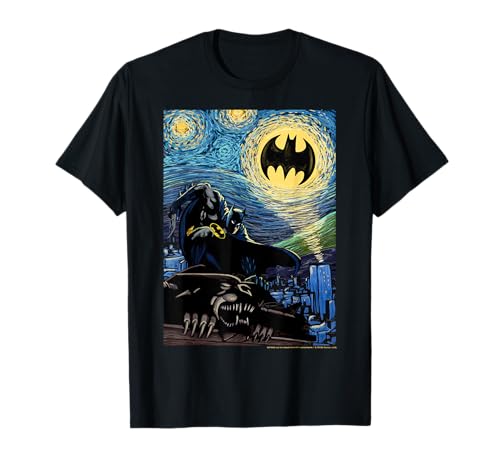
DC Comics Batman Distressed Classic Logo Short Sleeve T-Shirt
$16.99on amazon.com · Sep 29, 2026
Check sizes and price on Amazon
DC Comics
Batman is one of the few character ranges where one design is often sold in toddler, youth, women’s, plus and big-and-tall fits on the same Amazon listing — useful when you are buying for more than one person, or need a size above XL.
Start with who the shirt is for, then choose a design: the yellow-oval logo, a film or animated-series design, or recent comic art.
US 2T–4T
2 of the 8 shirts below are listed in toddler sizes on Amazon (checked Sep 29, 2026).
Check toddler sizes and prices on AmazonUS XS (4/5) – XL (14/16)
2 of the 8 shirts below are listed in kids & youth sizes on Amazon (checked Sep 29, 2026).
Check kids & youth sizes and prices on AmazonUS S–XL, most listings unisex
All 8 shirts below are listed in adult sizes on Amazon (checked Sep 29, 2026).
Check adult sizes and prices on AmazonMen’s Big and Tall and Women’s Plus fits, with sizes up to 6XL and tall lengths on several listings.
All 8 shirts below are listed this way (checked Sep 29, 2026), including:
Adult and children’s sizes offered on the same product page — the simplest way to put together a matching set. Some ranges use a different character per family member, so check the design menu.
2 of the 8 shirts below are listed this way (checked Sep 29, 2026), including:


Price and availability are taken from Amazon at the time shown and can change. The price on Amazon at the time of purchase applies.
Details are taken from each Amazon listing and Amazon’s size data on the date shown. Fits and sizes describe the whole listing, which can include other designs from the same range. Prices and sizes change; the product page is the final word.
| Design | Fits on listing | Sizes listed | Fabric and cut | Price | Retailer |
|---|---|---|---|---|---|
| DC Comics Batman Distressed Classic Logo DC Comics Listing says “officially licensed” |
Men, Men's Big and Tall, Women, Women's Plus, Youth, Girls | XS–6XL · 5 tall sizes · 2T–4T · 1X, 2X, 3X, 4X… | Fabric not stated Classic fit |
$16.99 checked Sep 29, 2026 |
Amazon.com Check sizes and price on Amazon |
| Batman Classic Logo Popfunk Listing says “officially licensed” |
Not stated | S–5XL | PRINTED IN USA - All designs are printed in our high-tech printing facility right here in Detroit, MI. Our… | $16.99 checked Sep 29, 2026 |
Amazon.com · sold by Popfunk Check sizes and price on Amazon |
| DC Comics Men's Batman Basic Logo DC Comics |
Not stated | S–3XL · 2X | 100% Cotton | $17.95 checked Sep 29, 2026 |
Amazon.com Check sizes and price on Amazon |
| Popfunk Batman Hush Logo Halloween Costume Black Popfunk Listing says “officially licensed” |
Not stated | S–5XL | PRINTED IN THE USA: Treat yourself to the unparalleled quality of our USA-printed graphic tees. Crafted in… | $17.99 checked Sep 29, 2026 |
Amazon.com · sold by Popfunk Check sizes and price on Amazon |
| BATMAN 89 Logo Yellow Symbol Justice League Costume Adult . BATMAN Listing says “officially licensed” |
Not stated | S–3XL | Fabric not stated | $9.97 checked Sep 29, 2026 |
Amazon.com · sold by Coast City Styles Check sizes and price on Amazon |
How these shirts were chosen. We search Amazon for Batman T-shirts, keep listings that are wearable tops and clearly about this character, and order them by Amazon’s current sales rank in its clothing category — a measure of what is selling, not of quality. Sizes, fits and fabric are quoted from the listing and Amazon’s size data. We have not worn, washed or tested these shirts.
Links go to Amazon, and we earn a commission if you buy. How we work.
The black bat on a yellow oval arrived in the comics in 1964 and became the best-known Batman mark through the 1960s TV series and the 1989 film poster. Films from Batman Begins onward dropped the oval for a plain black bat. The oval reads as Batman to almost anyone; a film or animated-series design reads as a particular Batman to people who know it.
See classic logo designs on AmazonA plain logo on black or grey is the most wearable choice for an adult and the easiest gift. Distressed logos, comic-cover art and poster prints are louder and suit a fan who wants the character to be the point of the shirt.
See logo designs on AmazonThree of the listings on this page offer the same design in toddler, youth, women’s and men’s fits. For a parent and child to match, choose every size from one listing — a similar design from another listing is often a different print or colour.
See matching options aboveThese links run a live Amazon search for Batman shirts in each US size band. Amazon shows what is currently listed; availability in a particular size is confirmed on the product page, not here.
| Band | Ages | US sizes | Search |
|---|---|---|---|
| Toddler | 2–4 years | 2T, 3T, 4T | Search toddler sizes |
| Kids | 4–7 years | XS (4/5), S (6/7) | Search kids sizes |
| Youth | 8–14 years | M (8), L (10/12), XL (14/16) | Search youth sizes |
| Adult | 15+ | S–3XL | Search adult sizes |
US sizing shown. Cut and measurement vary between brands — see the size guide before ordering, especially for youth sizes. Base search: Batman t-shirt.
Character guide
Batman is the rare superhero defined by absence: no powers, no origin gift, nothing but money, training and refusal. Bruce Wayne watched his parents die in an alley and decided the answer was to become the thing that frightens the people who do that. Everything else follows from that decision — the theatrical costume, the surveillance-grade preparation, the refusal to kill that reads as either moral bedrock or unresolved damage depending on the decade. He has been reinvented more thoroughly than almost any other character in print: a gun-carrying pulp avenger in 1939, a bright-suited camp icon in the 1960s television series, a grim urban legend after Frank Miller and Alan Moore in the 1980s, an operatic blockbuster figure under Tim Burton and later Christopher Nolan. The character survives all of it because the core is a costume anyone can imagine putting on, which is exactly why it works on a shirt.
“I'm Batman.”Batman (1989)
“It's not who I am underneath, but what I do that defines me.”Batman Begins (2005)
Batman is the proof that a superhero does not need superpowers, and the template for practically every grim, competent, self-made hero that followed. He is also the most commercially durable character in comics: the 1966 series and the 1989 film each triggered merchandising waves large enough to reshape the industry around them.
Signature motif: A black bat silhouette, usually inside a yellow ellipse
The bat-in-ellipse is one of the most reproducible marks in comics — a single black shape on a single yellow field, legible at any size and on any garment colour. Shirts split between the 1964–1999 yellow oval and the plain black 'Dark Knight' silhouette used since.
Almost all Batman apparel uses the emblem alone rather than the figure. The two dominant treatments are the flat yellow-oval badge and the distressed black bat; both read cleanly on black, grey and heather. Full-figure art is more common on kids' sizes.
| Performer | Production | Year | Type |
|---|---|---|---|
| Adam West | Batman | 1966 | live-action |
| Michael Keaton | Batman | 1989 | live-action |
| Val Kilmer | Batman Forever | 1995 | live-action |
| George Clooney | Batman & Robin | 1997 | live-action |
| Christian Bale | Batman Begins | 2005 | live-action |
| Ben Affleck | Batman v Superman: Dawn of Justice | 2016 | live-action |
| Robert Pattinson | The Batman | 2022 | live-action |
| Kevin Conroy | Batman: The Animated Series | 1992 | Voice |
Some do. 8 of the 8 Batman shirts on this page are listed on Amazon in extended fits such as Men’s Big and Tall, Women’s Plus, 3XL and above, or tall sizes, according to Amazon’s size data on Sep 29, 2026. The range differs by design, so check the size menu on the product page before ordering.
Often, yes. 2 of the 8 shirts on this page were offered in both adult and children’s sizes on the same Amazon listing on Sep 29, 2026. Some of those ranges use a different design for each family member rather than one identical print, so check the design or colour menu, and order every size from the same listing.
Batman was created by Bill Finger and Bob Kane, first appearing in Detective Comics #27 in 1939 (DC Comics).
A black bat silhouette, usually inside a yellow ellipse. Almost all Batman apparel uses the emblem alone rather than the figure. The two dominant treatments are the flat yellow-oval badge and the distressed black bat; both read cleanly on black, grey and heather. Full-figure art is more common on kids' sizes.
Yes — Batman appears on our kids pages, and shirts are commonly made from US toddler 2T up through youth XL.
Batman has been played on screen by Adam West (Batman, 1966), Michael Keaton (Batman, 1989), Val Kilmer (Batman Forever, 1995), George Clooney (Batman & Robin, 1997), and voiced by Kevin Conroy (Batman: The Animated Series, 1992).
Batman shirts we currently track start from around $9.97 on amazon.com. Every price on this page is dated, because they move.
The character guide was compiled from published reference material about Batman and is a secondary source rather than a substitute for the original publication. Shirt details come from Amazon listings at the dates shown. We do not physically test garments; see how we work.
Reference. This profile was compiled from published sources. For the character's full publication history see Wikipedia (Wikidata Q2695156). Our method and limitations are stated in full.
CharacterTshirts.com is an independent guide. It is not affiliated with, authorized by, endorsed by, or connected to any character rights holder, publisher, studio or network named on this site. All character names and titles are trademarks of their respective owners and are used here only to identify the products described.