Marvel
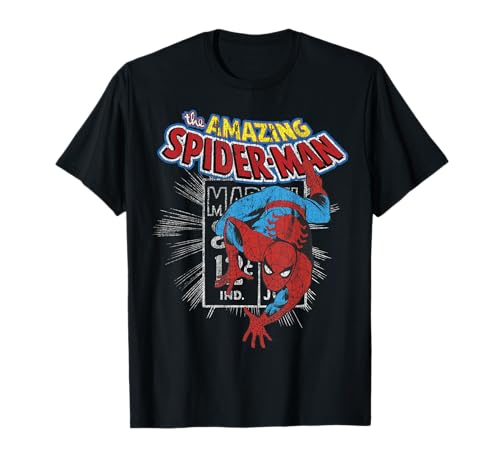
Marvel The Amazing Spider-Man Vintage Comic Poster Graphic Tees T Shirts for Men and Women
$19.99on amazon.com · Sep 29, 2026
Check sizes and price on Amazon
Marvel Comics
Most Spider-Man shirts on this page are sold in children’s and adult fits on the same Amazon listing, and several go up to men’s big and tall and women’s plus — so one design can cover a whole family.
Decide who it is for, then choose between the classic comic look and a design from one of the films.
US 2T–4T
7 of the 8 shirts below are listed in toddler sizes on Amazon (checked Sep 29, 2026).
Check toddler sizes and prices on AmazonUS XS (4/5) – XL (14/16)
7 of the 8 shirts below are listed in kids & youth sizes on Amazon (checked Sep 29, 2026).
Check kids & youth sizes and prices on AmazonUS S–XL, most listings unisex
All 8 shirts below are listed in adult sizes on Amazon (checked Sep 29, 2026).
Check adult sizes and prices on AmazonListings offered in Men’s Big and Tall, Women’s Plus, 3XL and above, or tall sizes.
6 of the 8 shirts below are listed this way (checked Sep 29, 2026), including:
Adult and children’s sizes offered on the same product page — the simplest way to put together a matching set. Some ranges use a different character per family member, so check the design menu.
7 of the 8 shirts below are listed this way (checked Sep 29, 2026), including:




Price and availability are taken from Amazon at the time shown and can change. The price on Amazon at the time of purchase applies.
Details are taken from each Amazon listing and Amazon’s size data on the date shown. Fits and sizes describe the whole listing, which can include other designs from the same range. Prices and sizes change; the product page is the final word.
| Design | Fits on listing | Sizes listed | Fabric and cut | Price | Retailer |
|---|---|---|---|---|---|
| Marvel The Amazing Spider-Man Vintage Comic Poster Tees T Shirts fo… Marvel Listing says “officially licensed” |
Men, Men's Big and Tall, Women, Women's Plus, Youth, Girls | XS–6XL · 5 tall sizes · 2T–4T · 1X, 2X, 3X, 4X… | Fabric not stated Classic fit |
$19.99 checked Sep 29, 2026 |
Amazon.com Check sizes and price on Amazon |
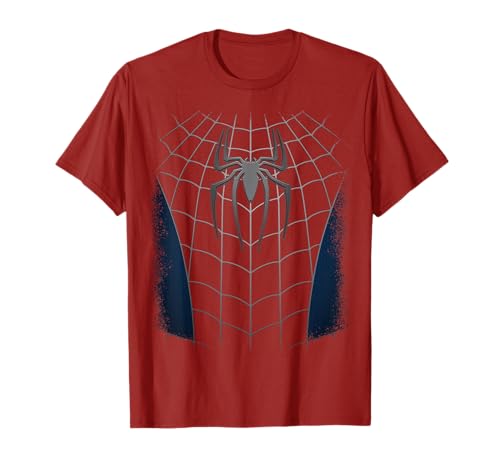
| Marvel Spider-Man Adult Men or Women Costume Red Blue Marvel Listing says “officially licensed” |
Baby Boy, Baby Girl, Boys, Girls, Men, Women | XS–2XL · 12 Months–5T · 2XL, 5, 6, 7-8… | Fabric not stated | $19.99 checked Sep 29, 2026 |
Amazon.com · sold by imagikids LLC Check sizes and price on Amazon |
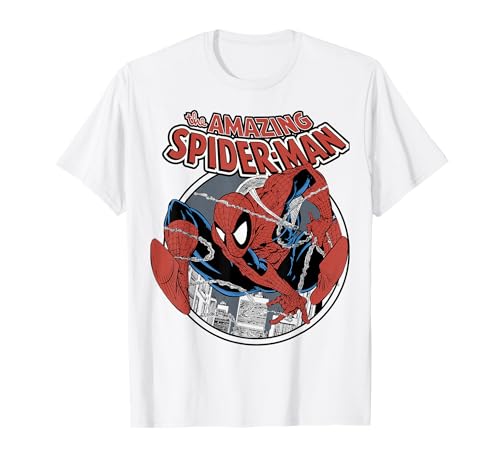
| Marvel Spider-Man Red Spider Vintage Comic Icon Marvel Listing says “officially licensed” |
Men, Men's Big and Tall, Women, Women's Plus, Youth | XS–6XL · 5 tall sizes · 2T–4T · 1X, 2X, 3X, 4X… | Fabric not stated Classic fit |
$19.99 checked Sep 29, 2026 |
Amazon.com Check sizes and price on Amazon |
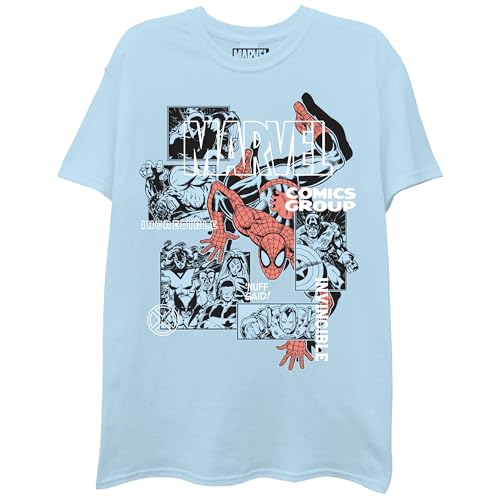
| Marvel Men’s Spider-Man & Avengers Super Heroes Collage Men's - Mar… Marvel |
Not stated | S–2XL · 3X-Large Big | High-Quality Screen-Printed Design: Vibrant and durable screen printed graphic for lasting vibrancy. Premiu… | $13.17 checked Sep 29, 2026 |
Amazon.com Check sizes and price on Amazon |
| Marvel Friendly Neighborhood Spider-Man No Way Home Costume Marvel |
Men, Women, Youth, Girls | XS–3XL · 2T–4T | Fabric not stated Classic fit |
$17.99 checked Sep 29, 2026 |
Amazon.com Check sizes and price on Amazon |
How these shirts were chosen. We search Amazon for Spider-Man T-shirts, keep listings that are wearable tops and clearly about this character, and order them by Amazon’s current sales rank in its clothing category — a measure of what is selling, not of quality. Sizes, fits and fabric are quoted from the listing and Amazon’s size data. We have not worn, washed or tested these shirts.
Links go to Amazon, and we earn a commission if you buy. How we work.
The red-and-blue suit with a black web pattern dates from Amazing Fantasy #15 in 1962 and carries through almost every version since. Vintage comic designs use that original art; film designs follow the suit from a particular film, such as No Way Home (2021).
See vintage comic designs on AmazonA spider emblem on its own is the quiet choice and works as an everyday adult shirt. Full comic-cover and poster prints are louder; the costume-print tees that recreate the suit are a favourite with young children and a joke on adults.
See emblem designs on AmazonMiles Morales is a separate Spider-Man with his own black-and-red suit, made famous by the Spider-Verse films. If that is the one the wearer means, his shirts are listed on his own page.
Miles Morales shirtsThese links run a live Amazon search for Spider-Man shirts in each US size band. Amazon shows what is currently listed; availability in a particular size is confirmed on the product page, not here.
| Band | Ages | US sizes | Search |
|---|---|---|---|
| Toddler | 2–4 years | 2T, 3T, 4T | Search toddler sizes |
| Kids | 4–7 years | XS (4/5), S (6/7) | Search kids sizes |
| Youth | 8–14 years | M (8), L (10/12), XL (14/16) | Search youth sizes |
| Adult | 15+ | S–3XL | Search adult sizes |
US sizing shown. Cut and measurement vary between brands — see the size guide before ordering, especially for youth sizes. Base search: Spider-Man t-shirt.
Character guide
Spider-Man changed what a superhero could be by making one who was not admired. Before 1962, teenage characters in comics were sidekicks; Peter Parker was the lead, and he was broke, unpopular, guilty and permanently behind on something. Stan Lee has said the publisher initially rejected the idea on the grounds that readers found spiders repellent and teenagers could not carry a book. The gamble worked because the powers are incidental to the premise: the story is about a boy who let a criminal go, lost his uncle to that same criminal, and has been trying to balance the ledger ever since. That single causal chain — power and responsibility, stated once and never dropped — is the most efficient origin in the genre. He has since become Marvel's flagship character and one of the most licensed fictional figures on earth.
“With great power there must also come great responsibility.”Amazing Fantasy #15 (1962)
The character who established that superheroes could have ordinary problems, which is the foundation of the entire Marvel house style. Commercially he is Marvel's most valuable single property and among the highest-grossing characters in film history.
Signature motif: The red-and-blue mask with black web lines and large white eye lenses
The web pattern is the strongest asset here — it is a texture rather than a logo, so it can cover a whole garment, frame a print or run as a sleeve treatment. The black spider emblem on red also works alone at any scale.
Unusually versatile on apparel because the webbing is a pattern, not a badge — it supports all-over prints, raglan sleeves and costume-style tees that few other characters can carry. The spider emblem alone is the cleanest option for adults; full-mask prints dominate kids' sizing.
| Performer | Production | Year | Type |
|---|---|---|---|
| Nicholas Hammond | The Amazing Spider-Man | 1977 | live-action |
| Tobey Maguire | Spider-Man | 2002 | live-action |
| Andrew Garfield | The Amazing Spider-Man | 2012 | live-action |
| Tom Holland | Captain America: Civil War | 2016 | live-action |
| Shameik Moore | Spider-Man: Into the Spider-Verse | 2018 | Voice |
Some do. 6 of the 8 Spider-Man shirts on this page are listed on Amazon in extended fits such as Men’s Big and Tall, Women’s Plus, 3XL and above, or tall sizes, according to Amazon’s size data on Sep 29, 2026. The range differs by design, so check the size menu on the product page before ordering.
Often, yes. 7 of the 8 shirts on this page were offered in both adult and children’s sizes on the same Amazon listing on Sep 29, 2026. Some of those ranges use a different design for each family member rather than one identical print, so check the design or colour menu, and order every size from the same listing.
Spider-Man was created by Stan Lee and Steve Ditko, first appearing in Amazing Fantasy #15 in 1962 (Marvel Comics).
The red-and-blue mask with black web lines and large white eye lenses. Unusually versatile on apparel because the webbing is a pattern, not a badge — it supports all-over prints, raglan sleeves and costume-style tees that few other characters can carry. The spider emblem alone is the cleanest option for adults; full-mask prints dominate kids' sizing.
Yes — Spider-Man appears on our kids pages, and shirts are commonly made from US toddler 2T up through youth XL.
Spider-Man has been played on screen by Nicholas Hammond (The Amazing Spider-Man, 1977), Tobey Maguire (Spider-Man, 2002), Andrew Garfield (The Amazing Spider-Man, 2012), Tom Holland (Captain America: Civil War, 2016), and voiced by Shameik Moore (Spider-Man: Into the Spider-Verse, 2018).
Spider-Man shirts we currently track start from around $13.17 on amazon.com. Every price on this page is dated, because they move.
The character guide was compiled from published reference material about Spider-Man and is a secondary source rather than a substitute for the original publication. Shirt details come from Amazon listings at the dates shown. We do not physically test garments; see how we work.
Reference. This profile was compiled from published sources. For the character's full publication history see Wikipedia (Wikidata Q79037). Our method and limitations are stated in full.
CharacterTshirts.com is an independent guide. It is not affiliated with, authorized by, endorsed by, or connected to any character rights holder, publisher, studio or network named on this site. All character names and titles are trademarks of their respective owners and are used here only to identify the products described.